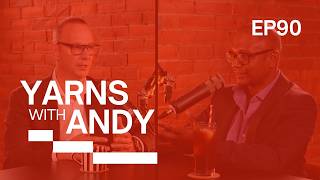
Josh Gibbons
About This Episode
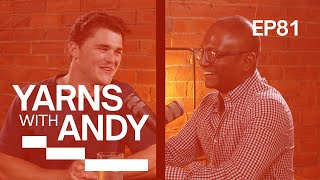
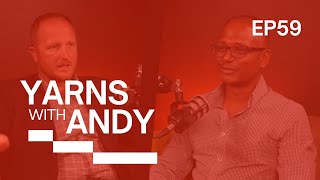
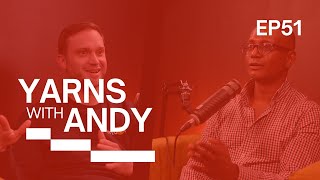
Josh Gibbons, regional manager for Cook Brothers Construction in Queenstown, came on for his first podcast with the conversation built around three beliefs he had written down in advance: people are the foundation, mistakes are the mentors, and the future's bright. He calls himself "a carpenter at heart" and "an accidental leader", an apprentice in Queenstown in 2004 who went from tool belt to site manager on the Remarkables base building and now leads a team of about 70. The emotional centre of the episode is his account of being diagnosed with ADHD at 38 after his managing director suggested he talk to someone, and of six months of treatment giving him the focus and confidence to do this recording at all. The practical centre is how Cook Brothers turns mistakes into shared lessons, monthly project reviews in a fixed format, scored lessons-learned at close, and a "camp handover" followed by regular "campfires". The last stretch turns to tendering and digital tools, where Andy makes his case that five contractors pricing the same PDFs is waste a single 3D model could remove.
Key Topics Discussed
- How do you lead without the hammer? Moving from carpenter to site manager meant leading through skills other than the tool belt. He credits a managing director who "was backing me before I was backing myself", and a senior site manager on the Remarkables job who kept the team on the one thing that had to be achieved that day.
- The Remarkables base building. Alpine logistics, an unprecedented snow season and a fixed opening date: "you couldn't just get an EOT claim and push it out." It is where he moved off the tools.
- People are the foundation. Construction is still bespoke and people-delivered. Technology is welcome, but his image is the nail gun: pneumatic, then cordless, and "we're still firing nails." The industry should invest in training and stop being scared of technology.
- Owning mistakes as a leader. Acknowledge them quickly, don't pretend to know everything, ask "how would I want to be spoken to", know your people's partners and children. "I've learned more from my team than I think I've taught them."
- ADHD at 38. He had been hard on himself for thoughts that would not land when he spoke. The diagnosis was "the catalyst to go okay this explains things and now I can put a plan around managing this." He shares it because "you don't see what's behind the eyes." Cook Brothers backs this with a people-and-performance coach and a help request that goes straight to the managing director.
- The suicide statistic. He told a university business-school cohort that construction had overtaken farming on suicide, and asks who will join an industry carrying that. Andy tells his own story of Drew Knowles walking him up Mount Eden, and puts Josh in touch with Rafael Caso.
- Mistakes are the mentors. "A mistake is only a mistake if it doesn't have a lesson from it." Construction forgets its lessons between jobs and hides failure out of fear. Cook Brothers runs an open door, monthly project reviews "religiously the same format", and a lessons-learned score at close across client communication, programming, commercial, health and safety, quality, sustainability and trade partners.
- Camp handover and campfires. Projects are handed to the delivery team at a camp with phones removed, then revisited at "campfires" every two to four weeks on fast fit-outs or roughly every 90 days, in 30-day sprints, on bigger jobs. Andy names it as lean and sprint practice.
- The future's bright, Queenstown against the national downturn. Queenstown has stayed busy while much of the country struggled. Its own constraints are logistics, housing affordability and transport, "a small population, but with big city expectations." His advice to contractors in the trough: get in early, accept a thinner margin, keep the cash flowing, "Keep your team there because you're going to need them when it comes back and it's busy." Andy's counter: half of them are already in Australia.
- "ECP" and honest ECI. He renames ECI an "early contracted partnership" and admits the industry, himself included, has used ECI "as a negotiation tool". Risk should sit with whoever can best manage it, so contractors are not driven to fight every EOT because liquidated damages wait at the end.
- Andy's tender-duplication argument. Clients issue PDFs, five contractors each produce their own take-off and programme, and the project manager compares "apples to orange to bananas." Andy's alternative is one LOD 350 model generating the estimate and programme, validated by the contractors on a shared WBS. He describes his own iBOQ tooling and says he builds it from his garage. Josh's counterpoint is from 2018: Procore replaced Excel RFIs and Word instructions, but "it's just a little bit quicker", the nail gun again.
- Advice to a young tradesperson. Choose your five closest people carefully, "because some people do want the best for you and others don't."
Notable Quotes
- "how do you lead when you don't have a hammer to swing", Josh Gibbons (8:25)
- "a mistake is only a mistake if it doesn't have a lesson from it.", Josh Gibbons (32:48)
- "You can't get it perfect and and you're dreaming if you think you will.", Josh Gibbons (33:39)
- "Keep your team there because you're going to need them when it comes back and it's busy.", Josh Gibbons (46:36)
- "I'm a construction professional. Taught myself how to code.", Andy Alagappan (58:44)
Guest Background
Josh Gibbons grew up in a small dairy-farming town; his grandfather wanted to be a builder but spent his working life at a paper mill, and his father is a tradesman. He began his carpentry apprenticeship in Queenstown in 2004. He worked for Cook Brothers, spent a period with Arrow International (including time in Chicago and the Remarkables base building), and returned to Cook Brothers, moving from project manager to regional manager of the Queenstown team. He says Cook Brothers is approaching 21 years, with five branches and over 300 people. He is under 40, has an eight-year-old son, and first left the southern hemisphere for the 2018 Procore conference in Austin, Texas.