Cameron Luxton
About This Episode
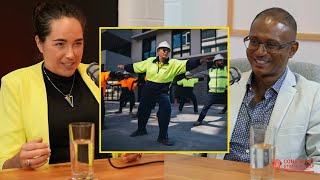
Cameron Luxton returns for the ACT slot in the election series, nineteen months after Ep 59. The first episode was about policy ACT wanted; this one is a scorecard of three years in coalition and an unusually candid argument about a Bill his own government is passing. Overseas-product acceptance has gone from select committee to practice ("200,000 products", mostly plumbing fixtures so far). Self-certification has arrived for plumbers and drainlayers, and standard designs are enabled in law. The centre of the episode is the Building Amendment Bill's move from joint and several to proportional liability. He supports it, then says "I'm not confident that's the best route": each party may simply insure itself to 100% while liability is only apportioned at the end. His own alternative is to treat the council as "a default insurer" and the ratepayer as "an underwriter", and to start by finding out what councils actually carry on their books. He disclaims the legal reading himself: "I'm a Bush lawyer." The rest covers the downturn ("a big party with a lot of alcohol and there was going to be a hangover"), ACT's policies on infrastructure maintenance and over-engineering, the RMA replacement, and the size of government.
Key Topics Discussed
- Why he went into politics. Industry told a government it could not build 100,000 houses without changing the rules: "They either think we're corrupt or incompetent if they think they can get 100,000 houses cheaper without changing the rules." Industry, he says, was right.
- The coalition scorecard. Overseas products through CodeMark/WaterMark-style schemes deemed to comply, so councils no longer re-approve each product. Self-certification for plumbers and drainlayers. Standard designs enabled, "I haven't seen many of those yet". Building consent authorities can now amalgamate, though nothing mandates it.
- Proportional liability, supported, and doubted. Joint and several makes councils "incredibly risk averse". The Bill moves to proportional liability, which he backs, but he worries every party will gear up to full cover while liability is only apportioned after the event: "I'm worried we run into something that isn't actually the best outcome." He says he has raised it in the House and with Chris Penk. The Bill is "still a bill"; he expects it to pass because every party voted for it.
- Andy's multi-trade scenario. An HVAC installer depends on other trades; "if something had to go wrong, then you'd have to do a full root cause analysis" to apportion liability. Andy's point is that the time cost, a building pushed out by months, can outweigh the money.
- Councils as default insurers. His alternative is to make the cost visible: the council is a default insurer, the ratepayer the underwriter, so the first step is "what is it that councils have on their books? What's the likelihood that they have to pay that out?" Private insurance should be enabled, though he does not know whether the product exists yet.
- The downturn. Andy describes three years of thin cash flow, high rates, people leaving for Australia and having had "to go looking for work overseas just to kind of sustain my business here", and cites the AECOM sentiment launch. Cameron blames money printing and borrowing: "We we were having a big party with a lot of alcohol and there was going to be a hangover."
- Stability and maintenance. "Don't chop and change major projects." ACT's transport policy ring-fences the National Land Transport Fund maintenance budget for three years. Deferring most Roads of National Significance is "a mature thing to do when the finances of the country are not able to do it."
- Over-engineering. Publish the lowest-cost safe design alongside any "frills" option, and legislate that the difference be stated. His builder's habit: "I carried a 3B1 notebook in my apron" for extras, signed and dated on the spot.
- Plasterboard, again. British plasterboard landed "for 10 bucks a sheet and the equivalent product in New Zealand was $25", now framed as government-created monopoly.
- RMA replacement. Two bills replacing the RMA, regulatory relief so councils pay for overlays they impose, and national standards that are "deemed to have complied". "RMA has just given everybody an excuse to say no and nobody an incentive to say yes."
- Rules and the size of government. Chesterton's Fence applied to regulation: "We need to do that with our rules across the board." One minister per ministry and clear chief-executive accountability; he says MBIE answers to around 17 ministers. Andy's version: "you just need a clean racy [RACI] matrix".
- Coalition trade-offs. "Well, we got policies in there that the National Party wasn't over the moon about. You know, it's quit proquo [quid pro quo], I suppose."
Notable Quotes
- "I'm not confident that's the best route.", Cameron Luxton, on proportional liability in the Building Amendment Bill (9:23)
- "if you imagine that the council um is a default insurer and rateayer is an underwriter.", Cameron Luxton (13:25; "rateayer" = ratepayer)
- "I think reading the bill um and look, I'm a Bush lawyer.", Cameron Luxton (12:20)
- "RMA has just given everybody an excuse to say no and nobody an incentive to say yes.", Cameron Luxton (36:34)
- "We we were having a big party with a lot of alcohol and there was going to be a hangover.", Cameron Luxton, on the downturn (21:07)
Guest Background
ACT Party MP and the only Licensed Building Practitioner elected to Parliament (Andy's introduction). In this episode he says he left school at 15, took up a building trade, worked on and later ran dairy farms, "the reason I went farming was GFC", and returned to building before politics. He no longer sits on the select committee for the overseas materials legislation ("Not not anymore."). The episode never uses the title "construction spokesperson"; the election series workbook lists him as ACT's Building and Construction spokesperson.